

What Is a Blockchain?
A blockchain is a distributed, append-only digital ledger that records transactions across multiple nodes using cryptographic verification and consensus protocols.
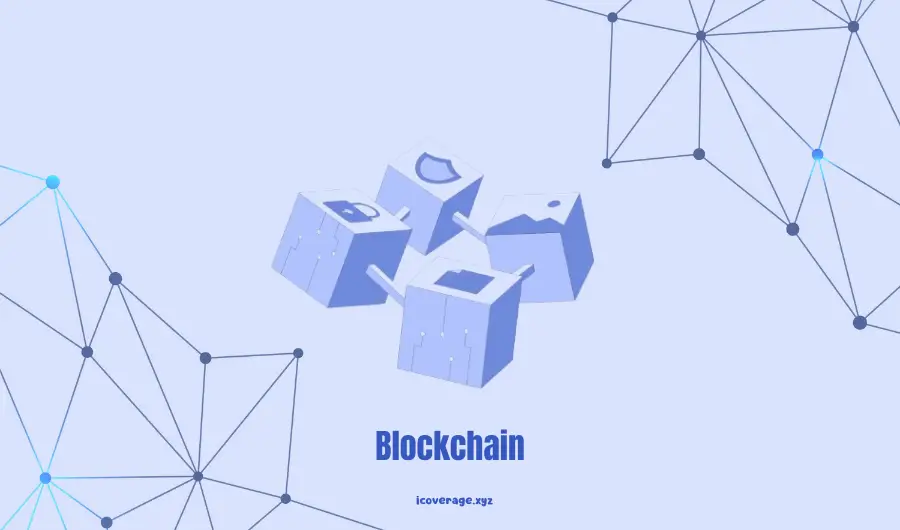
Foundational Definition and Architecture
A blockchain is a data structure designed to maintain a continuously growing list of records, called blocks, which are securely linked using cryptographic hashes. Each block contains a batch of validated transactions, a timestamp, and a reference to the previous block’s hash. This chaining mechanism ensures that once data is recorded, altering any historical entry would require recalculating all subsequent hashes, making tampering computationally impractical.
The architecture is inherently decentralized. Instead of relying on a single authoritative database, identical copies of the ledger are maintained across a network of independent nodes. Each node independently verifies transactions and blocks according to a shared protocol. This eliminates the need for a central administrator while ensuring that all participants converge on a consistent version of the ledger.
Cryptographic Foundations
The integrity and security of a blockchain rely heavily on established cryptographic primitives. Hash functions, such as SHA-256 used in Bitcoin, convert input data into fixed-length outputs in a manner that is deterministic yet resistant to inversion and collision. This ensures that even a minor change in input data produces a significantly different hash, enabling efficient detection of data manipulation.
Public-key cryptography is used to authenticate transactions. Each participant controls a pair of cryptographic keys: a private key, which is kept secret and used to sign transactions, and a public key, which is shared and used by others to verify signatures. This mechanism ensures that only the legitimate owner of a digital asset can authorize its transfer without exposing sensitive credentials.
Transaction Lifecycle and Validation
Transactions are the fundamental units of activity within a blockchain. A transaction typically represents the transfer of value or the execution of a predefined instruction. When a transaction is initiated, it is broadcast to the network, where nodes independently validate its structure, authenticity, and compliance with protocol rules.
Validated transactions are grouped into candidate blocks by specialized nodes, often referred to as validators or miners depending on the consensus mechanism. Once a block is formed, it must be accepted by the network through a consensus process before it is appended to the chain. This ensures that all nodes agree on the legitimacy of the data being added.
Consensus Mechanisms
Consensus mechanisms are central to blockchain operation, providing a method for distributed nodes to agree on the state of the ledger without a central authority. Different blockchain systems implement different consensus algorithms, each with distinct trade-offs in terms of security, scalability, and energy consumption.
Proof of Work, first implemented in Bitcoin, requires participants to solve computationally intensive puzzles to propose new blocks. This approach secures the network by making malicious attacks economically prohibitive, as altering the blockchain would require controlling a majority of the network’s computational power.
Proof of Stake, used in networks such as Ethereum after its transition in 2022, replaces computational work with economic stake. Validators are selected to propose and validate blocks based on the amount of cryptocurrency they lock as collateral. This reduces energy consumption while maintaining security through financial incentives and penalties.
Other consensus models, including Delegated Proof of Stake and Byzantine Fault Tolerance-based systems, are employed by various blockchain platforms to optimize performance and governance structures for specific use cases.
Immutability and Data Integrity
A defining characteristic of blockchain systems is immutability. Once a block is appended and confirmed by the network, its contents are effectively permanent. This is achieved through the combination of cryptographic linking and distributed consensus, which together make unauthorized modifications infeasible without detection.
Immutability does not imply absolute permanence in a theoretical sense, but rather practical resistance to change under realistic conditions. In large networks like Bitcoin, the computational and economic cost required to alter historical data is prohibitively high, reinforcing trust in the system’s integrity.
Decentralization and Trust Model
Traditional databases rely on centralized authorities to manage access, validate transactions, and ensure data integrity. Blockchain systems replace this model with a decentralized trust framework in which verification is performed collectively by network participants.
This shift fundamentally alters how trust is established. Instead of trusting a single institution, users rely on transparent protocols, open-source code, and cryptographic verification. The ledger’s state is publicly auditable, allowing any participant to independently verify transactions and balances without relying on intermediaries.
Decentralization also enhances resilience. Because data is replicated across multiple nodes, the system remains operational even if some nodes fail or are compromised. This distributed architecture reduces single points of failure and increases resistance to censorship.
Smart Contracts and Programmability
Modern blockchain platforms extend beyond simple transaction recording by supporting programmable logic known as smart contracts. These are self-executing pieces of code stored on the blockchain that automatically enforce predefined conditions when triggered.
The concept was formalized and implemented at scale by Ethereum, which introduced a Turing-complete virtual machine capable of executing complex decentralized applications. Smart contracts enable a wide range of use cases, including decentralized finance, supply chain tracking, and digital identity management.
Once deployed, smart contracts operate autonomously and are typically immutable, meaning their logic cannot be altered without deploying a new contract. This ensures predictable execution but also requires careful design and auditing to prevent vulnerabilities.
Data Transparency and Privacy Considerations
Blockchain systems offer varying degrees of transparency depending on their design. Public blockchains, such as Bitcoin, allow anyone to view transaction data, although user identities are represented by cryptographic addresses rather than real-world identities.
This model provides pseudonymity rather than full anonymity. Advanced analysis techniques can sometimes link addresses to individuals, particularly when combined with external data sources. As a result, privacy-enhancing technologies such as zero-knowledge proofs and ring signatures have been developed to strengthen confidentiality in certain blockchain systems.
Private and permissioned blockchains, used by organizations such as IBM in enterprise solutions like Hyperledger Fabric, restrict access to authorized participants. These systems prioritize control and compliance over full decentralization, making them suitable for regulated environments where data privacy and governance are critical.
Blockchain vs. Traditional Databases
A blockchain differs fundamentally from traditional database systems in both structure and operational philosophy. Conventional databases are optimized for efficiency, allowing rapid updates, deletions, and centralized control. They rely on trusted administrators to enforce rules and maintain data integrity.
In contrast, a blockchain is designed for trust minimization. Data is appended rather than modified, and all changes are transparently recorded. This design introduces performance trade-offs, including lower throughput and higher latency compared to centralized systems. However, it provides strong guarantees of integrity, auditability, and resistance to unauthorized modification.
The choice between a blockchain and a traditional database depends on the specific requirements of the application. Systems that require shared trust among untrusted parties or verifiable audit trails may benefit from blockchain technology, while those prioritizing speed and efficiency may be better served by conventional architectures.
Real-World Applications
Blockchain technology has been applied across multiple industries, often in contexts where transparency, traceability, and decentralized coordination are essential. In finance, decentralized networks like Ethereum enable peer-to-peer transactions, lending, and asset trading without traditional intermediaries.
In supply chain management, organizations use blockchain to track the provenance of goods. For example, Walmart has implemented blockchain-based systems in collaboration with IBM to improve food traceability, enabling rapid identification of contamination sources.
In digital identity, blockchain systems provide users with greater control over personal data by allowing them to manage credentials without relying on centralized authorities. This approach reduces the risk of data breaches and enhances privacy.
Scalability and Technical Challenges
Despite its advantages, blockchain technology faces significant technical challenges, particularly in scalability. Public blockchains often struggle to handle high transaction volumes due to the need for distributed consensus and data replication across nodes.
Efforts to address scalability include layer-two solutions, such as payment channels and rollups, which process transactions off-chain while relying on the underlying blockchain for final settlement. Ethereum has actively developed such solutions to increase throughput and reduce transaction costs.
Other approaches involve modifying the base protocol, including sharding, which partitions the network into smaller segments that process transactions in parallel. Each approach introduces trade-offs in complexity, security, and decentralization, requiring careful design and implementation.
Governance and Network Evolution
Blockchain networks evolve through governance mechanisms that determine how protocol changes are proposed, evaluated, and implemented. In decentralized systems, governance is often distributed among developers, validators, and users, leading to complex decision-making processes.
Changes to a blockchain protocol typically require consensus among participants. When consensus cannot be reached, the network may undergo a fork, resulting in two separate blockchains with shared history but divergent rules. This has occurred in networks like Bitcoin, where disagreements over technical direction led to the creation of alternative chains.
Governance models vary widely across blockchain systems, ranging from informal community-driven processes to structured on-chain voting mechanisms. The choice of governance framework significantly influences a network’s adaptability and long-term sustainability.
Security Model and Threat Landscape
Blockchain security is based on a combination of cryptographic guarantees and economic incentives. Attacks such as double-spending or chain reorganization require significant resources, making them impractical in well-established networks.
However, vulnerabilities can arise at different layers of the ecosystem. Smart contract bugs, for example, have led to high-profile exploits in decentralized applications built on Ethereum. These incidents highlight the importance of rigorous code auditing and formal verification.
Network-level attacks, including 51% attacks, remain a concern for smaller blockchains with limited computational or economic participation. In such cases, an attacker controlling a majority of the network’s resources could potentially manipulate transaction ordering or block validation.
Conclusion
A blockchain is a cryptographically secured, decentralized ledger that enables multiple parties to maintain a shared, tamper-resistant record of transactions without relying on a central authority. By combining distributed systems architecture, cryptographic verification, and consensus protocols, it establishes a new model for trust, transparency, and data integrity.
While the technology introduces trade-offs in performance and complexity, its ability to provide verifiable, immutable records has driven adoption across finance, supply chains, and digital identity systems. As development continues, advancements in scalability, privacy, and governance will shape the role of blockchain in both public and enterprise environments.
Disclaimer: The content on this page and all pages of Icoverage.xyz are presented for informational purposes only and should not be considered finance or legal advice.
This page may contain affiliate promotions.



Informations published are not financial advice.
We use diverse first and third party softwares on our website.
If you found an error, misinformation, or something harmful or unusual on this page please report it now!
This page or pages of this website may contain affiliate links that earn us commissions when you use them at no additional cost to you.
© ICPF All Rights Reserved | sitemap