

What Is Macroeconomics?
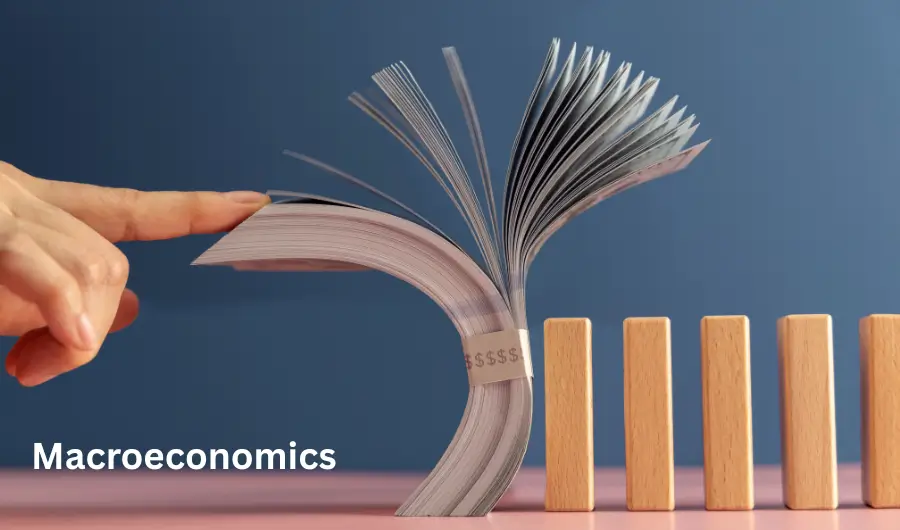
Macroeconomics is the branch of economics that studies the economy as a whole. Instead of focusing on individual people, households, or companies, it looks at large scale economic behavior and outcomes.
It asks questions about entire countries and, in some cases, the global economy. Questions such as why economies grow over time, why inflation rises or falls, why unemployment exists, and why recessions happen all fall under macroeconomics.
To understand macroeconomics, it helps to think of an economy as a living system made up of millions of smaller decisions. People decide what to buy, where to work, and how much to save. Businesses decide how much to produce, who to hire, and where to invest.
Governments decide how much to tax, how much to spend, and how to regulate economic activity. Macroeconomics studies the combined result of all these decisions and tries to explain the patterns that emerge.
While microeconomics focuses on individual markets and choices, macroeconomics zooms out. It is concerned with totals and averages.
Total production, average income, overall employment, and general price levels are central topics. The goal is not only to describe what is happening in an economy, but also to understand why it is happening and what can be done to improve economic outcomes.
Macroeconomics matters because it directly affects everyday life. The interest rates on loans, the availability of jobs, the cost of living, and the stability of a country’s currency are all influenced by macroeconomic forces.
Governments, central banks, investors, and international organizations rely on macroeconomic analysis to make decisions that can shape the future of entire populations.
The Big Picture View of the Economy
At its core, macroeconomics is about seeing the big picture. An economy is not just a collection of markets. It is a system where production, income, spending, and savings are tightly connected.
When businesses produce goods and services, they pay wages and salaries to workers. Those workers then spend part of their income on goods and services, which supports further production. Some income is saved, some is taxed, and some is spent on imports from other countries.
Governments collect taxes and use them to fund public services and investments. Financial institutions channel savings into investments. All of these flows happen simultaneously, and macroeconomics studies how they fit together.
One useful way to understand this big picture is to think in terms of economic cycles. Economies tend to go through periods of expansion, where production and employment grow, and periods of contraction, where economic activity slows down.
These cycles are not random. They are influenced by changes in technology, consumer confidence, government policy, global events, and financial conditions.
Macroeconomics tries to identify the forces that drive these cycles and to understand how severe they might become. This knowledge is especially important during times of crisis, such as financial crashes or global pandemics, when economic activity can decline sharply.
Gross Domestic Product and Economic Output
One of the most important concepts in macroeconomics is Gross Domestic Product, often called GDP. GDP measures the total value of all final goods and services produced within a country over a specific period of time, usually a year or a quarter.
GDP is used as a broad indicator of economic size and economic health. When GDP is growing, it usually means that the economy is producing more goods and services, which often leads to higher incomes and better living standards. When GDP is shrinking, it can signal economic trouble.
There are several ways to calculate GDP, but they all aim to measure the same thing. One common approach adds up spending in the economy. This includes spending by households on consumption, spending by businesses on investment, spending by the government on goods and services, and net exports, which is exports minus imports.
Another approach adds up incomes earned in the economy, such as wages, profits, and rents. In theory, total spending and total income should be equal, because one person’s spending is another person’s income.
Despite its usefulness, GDP has important limitations. It does not measure how income is distributed among people. A country can have a high GDP while many citizens struggle financially.
GDP also does not account for unpaid work, such as caregiving, or for environmental damage caused by production. Because of these limitations, economists often use GDP alongside other indicators to get a fuller picture of economic well being.
Employment and Unemployment
Employment is a central concern in macroeconomics because having a job is one of the main ways people earn income and participate in the economy. Unemployment refers to people who are able and willing to work but cannot find a job.
Macroeconomists study the overall unemployment rate, which is the percentage of the labor force that is unemployed. Changes in the unemployment rate can reveal a lot about the state of the economy.
During economic expansions, businesses tend to hire more workers, and unemployment usually falls. During recessions, businesses may cut back on production and lay off workers, causing unemployment to rise.
Not all unemployment is the same. Some unemployment exists even in healthy economies. For example, people may be between jobs or entering the workforce for the first time.
This type of unemployment is often temporary and is sometimes called frictional unemployment. Other forms, such as unemployment caused by a mismatch between workers’ skills and available jobs, can be more persistent.
Macroeconomics is particularly concerned with widespread unemployment that results from a lack of overall demand in the economy. When households and businesses reduce spending, production falls, and employers may not need as many workers.
Understanding how to reduce this type of unemployment is one of the main goals of macroeconomic policy.
Inflation and Price Stability
Inflation refers to a general increase in prices across the economy over time. When inflation occurs, the purchasing power of money declines, meaning that the same amount of money buys fewer goods and services than before.
Moderate inflation is common in growing economies and is not necessarily harmful. However, high or unpredictable inflation can create serious problems. It makes planning more difficult for households and businesses, reduces the value of savings, and can lead to social and political instability.
Macroeconomists measure inflation using price indices, which track the average price of a basket of goods and services over time. One widely used measure focuses on consumer prices, reflecting the cost of everyday items such as food, housing, transportation, and healthcare.
Understanding inflation requires examining both demand and supply. Inflation can occur when demand in the economy grows faster than supply, pushing prices up. It can also result from increases in production costs, such as wages or raw materials, which businesses pass on to consumers in the form of higher prices.
Maintaining price stability is a key objective of macroeconomic policy, particularly for central banks. By managing interest rates and controlling the supply of money, central banks aim to keep inflation at levels that support economic stability and growth.
Economic Growth and Living Standards
Economic growth refers to an increase in the economy’s capacity to produce goods and services over time. It is usually measured by the growth rate of real GDP, which adjusts for inflation.
Sustained economic growth is important because it allows living standards to improve. When an economy produces more, it can provide better housing, healthcare, education, and infrastructure. Growth also creates opportunities for employment and innovation.
Macroeconomics studies the sources of economic growth. These include increases in the labor force, improvements in skills and education, accumulation of capital such as machinery and infrastructure, and advances in technology. Institutions, such as legal systems and property rights, also play a crucial role by creating an environment where investment and innovation can thrive.
Growth is not automatic, and it is not evenly distributed across countries or within societies. Some economies grow rapidly for decades, while others struggle to achieve sustained growth. Macroeconomic analysis helps explain these differences and informs policies aimed at promoting long term development.
Government Policy and the Economy
Governments play a significant role in macroeconomics through their policies and actions. Fiscal policy refers to government decisions about spending and taxation. By increasing spending or cutting taxes, governments can stimulate economic activity during downturns. By reducing spending or raising taxes, they can slow down an overheated economy and reduce inflationary pressures.
Macroeconomists analyze how fiscal policy affects demand, employment, and growth. Government spending can directly increase demand for goods and services, while tax policies influence how much households and businesses spend or save.
Another important area is public debt. When governments spend more than they collect in taxes, they run deficits and accumulate debt. Macroeconomics studies when debt is manageable and when it becomes a risk to economic stability.
Government policy also includes regulation, social programs, and investments in areas such as education and infrastructure. These policies shape the long term structure and performance of the economy.
Money, Banking, and Central Banks
Money is a central concept in macroeconomics because it facilitates exchange and influences economic activity. Modern economies rely on banking systems and central banks to manage money and credit.
Central banks are institutions responsible for overseeing the monetary system. Their primary goals often include maintaining price stability and supporting economic growth. One of their main tools is the control of interest rates. By lowering interest rates, central banks encourage borrowing and spending. By raising rates, they discourage excessive borrowing and help control inflation.
Macroeconomics examines how changes in the money supply and interest rates affect investment, consumption, and overall economic activity. It also studies the role of banks in creating credit and the risks that can arise when financial systems become unstable.
Financial crises, such as banking collapses or asset bubbles, are major topics in macroeconomics because they can disrupt the entire economy. Understanding how financial systems interact with the broader economy is essential for preventing and managing such crises.
International Trade and Global Macroeconomics
In a globalized world, macroeconomics extends beyond national borders. Countries trade goods and services, exchange currencies, and invest in one another’s economies. These interactions create both opportunities and challenges.
Macroeconomists study trade balances, which compare a country’s exports and imports. They also examine exchange rates, which determine how much one currency is worth in terms of another. Exchange rates affect trade competitiveness, inflation, and capital flows.
Global macroeconomics also looks at how economic events in one country can spill over to others. A recession in a major economy can reduce demand for exports from other countries. Financial shocks can spread quickly through global markets.
International institutions and agreements play a role in managing these interactions, and macroeconomic analysis helps policymakers navigate the complexities of the global economy.
Schools of Thought in Macroeconomics
Macroeconomics is not a single, unified set of ideas. Over time, different schools of thought have developed, each offering its own perspective on how economies work and how policies should be designed.
Some approaches emphasize the role of demand and government intervention, arguing that markets do not always self correct quickly. Others focus on the importance of market efficiency and long term incentives, cautioning against excessive intervention.
Modern macroeconomics often combines insights from multiple perspectives. Economists use data, models, and historical experience to evaluate which ideas best explain real world outcomes.
Understanding these different viewpoints helps explain why economists sometimes disagree about policy decisions and why economic debates can be complex and nuanced.
Why Macroeconomics Matters
Macroeconomics matters because it shapes the environment in which individuals and businesses operate. It influences job opportunities, income growth, price stability, and economic security.
For policymakers, macroeconomics provides a framework for designing policies that aim to promote prosperity and stability. For businesses and investors, it offers tools to understand economic trends and risks. For citizens, it helps explain why economic conditions change and how collective decisions affect everyday life.
Conclusion
Macroeconomics is the study of the economy at its broadest level. It examines production, employment, inflation, growth, and the role of government and financial institutions. By focusing on the big picture, it helps explain patterns that emerge from countless individual actions.
While the subject can seem abstract, its implications are deeply practical. The concepts of macroeconomics help explain why economies grow or stagnate, why prices rise or fall, and why policies matter. Whether you are a student, a professional, or simply someone curious about how the world works, understanding macroeconomics provides valuable insight into the forces that shape modern life.
Disclaimer: The content on this page and all pages of Icoverage.xyz are presented for informational purposes only and should not be considered finance or legal advice.
This page may contain affiliate promotions.


Informations published are not financial advice.
We use diverse first and third party softwares on our website.
If you found an error, misinformation, or something harmful or unusual on this page please report it now!
This page or pages of this website may contain affiliate links that earn us commissions when you use them at no additional cost to you.
© ICPF All Rights Reserved | sitemap